2D Supports High Speed Karlsruhe at the F-120 Rollout
22. MAY 2026
From University to Track: 2D Supports High Speed Karlsruhe at the F-120 Rollout
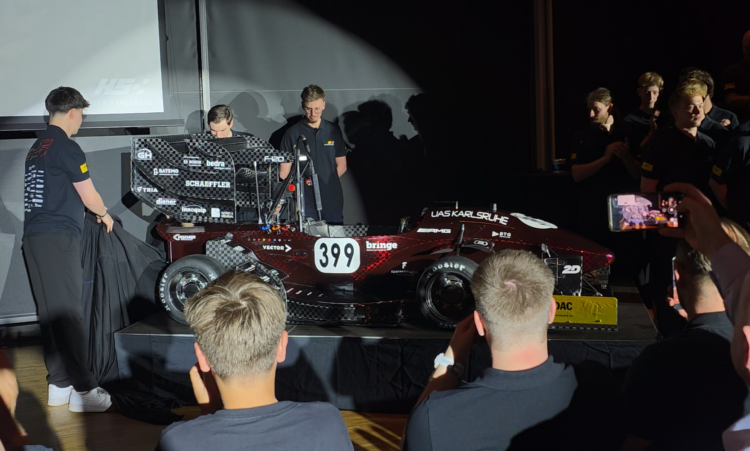
Every late summer, the same ritual begins at Karlsruhe University of Applied Sciences: a new team, a new car, a new goal. The student group High Speed Karlsruhe (HSK) has been building its own race car for the Formula Student competition every year since 2006 and for the past three years, 2D has been part of that journey.
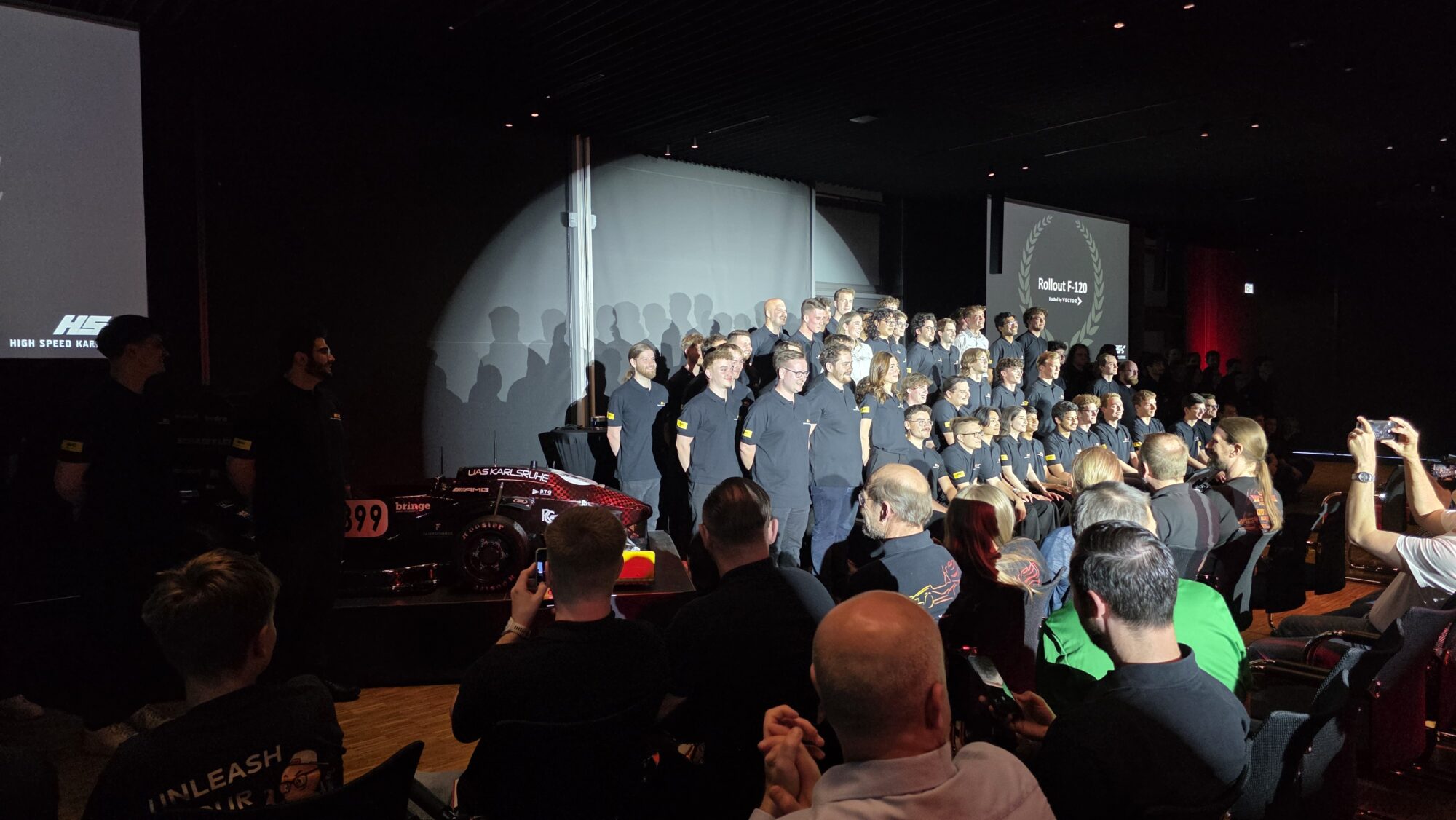
This year, we witnessed the rollout of the F-120 up close. What the team accomplished in a single season deserves more than a passing mention.
The Car: F-120
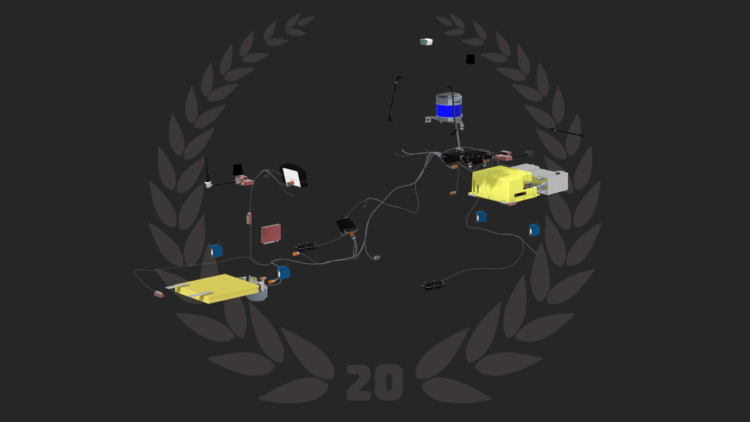
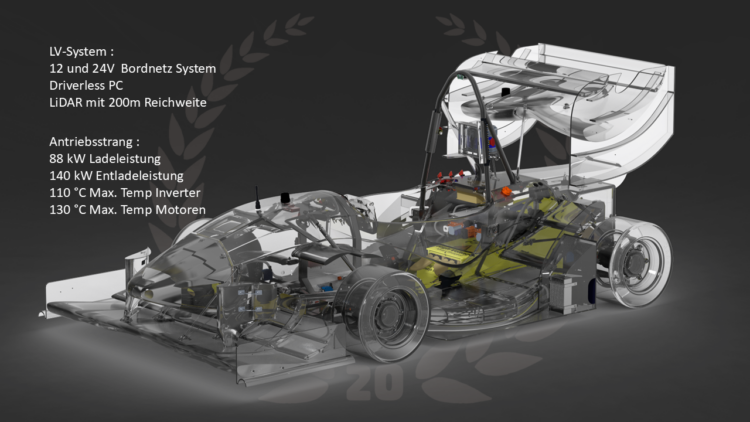
The F-120 is not an incremental update. The team rethought the entire electrical/electronic architecture: two fewer CAN buses, five fewer ECUs, 1.8 kg saved — all while increasing sensor integration. The CFRP monocoque weighs under 18 kg, the aerodynamics were optimized through CFD simulation, and for the first time the team is actively working on autonomous driving functions with LiDAR-based environment perception. No small undertaking for students attending lectures at the same time.
What 2D Contributes
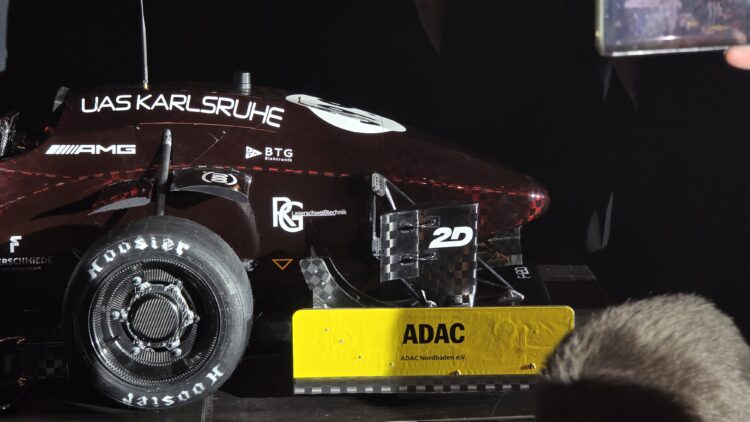
For this season, HSK receives the following hardware and software from us:
– CANStick 3C V5W
– Current Amplifier Interface
– Dynamic GPS2CAN Module (12.5 Hz)
– Software Package
The CANStick V5W sits centrally in the car and handles not only data logging but also enables the team’s live telemetry directly at the track. The GPS2CAN module provides high-precision position data for vehicle state estimation and control models.
Lukas on Data Analysis in Motorsport
Lukas has been with the team for two years and is responsible for chassis and vehicle dynamics control. For him, data analysis is not an optional add-on:
“Through sensors and data is the only way you can understand what your car is actually doing these days. Design changes, setup changes, cooling — whatever it is — you have to be able to prove it, and that’s the only way to do it.”
He particularly values the track map with overlay channel in the 2D software: instead of reading raw curves, the team sees color-coded where the car under- or oversteers — corner by corner. For the F-120’s vehicle dynamics control, he also uses the histogram function to visualize motor power across different battery voltage ranges in three dimensions.
“On one axis you can see what the driver demands, what the inverter does — and which battery voltage range we’re in, as a third color channel. Then you immediately see when an inverter is problematic.”
Rick and the Diagnosis That Changed Everything
Rick comes from electrical and systems integration. Together with his team, he set up the entire E/E architecture of the F-120 — deliberately relying on 2D hardware to replace ECUs and integrate analog sensors directly via CAN.
The story that most clearly shows why data acquisition matters in motorsport didn’t happen in the lab, but during testing:
“We were testing in Czechia and noticed something was wrong – the car kept shutting down, an absolute no-go. Through the telemetry data from the 2D logger, we noticed: every time we had strong lateral acceleration, we got dropouts. We were able to trace it back until it was clear that one specific ECU was losing its live signal under lateral acceleration. We opened it up – a broken cable. Fixed it, moved on.”
Without telemetry: an unclear problem, lost time, possibly a missed competition. With telemetry: fault located, fixed, done.
Rick puts it bluntly: “That was only possible thanks to 2D.”
Why This Partnership Works
Formula Student teams are demanding users. They have limited budgets, limited time, high technical requirements — and they learn fast. What they need is hardware that’s compact, easy to install, and software that goes deep enough to support real development work.